

As a parent, you’ve probably heard plenty of advice about helping your child focus better, manage emotions more effectively, or navigate sensory challenges. But when your child has ADHD or is on the autism spectrum (ASD), you know these struggles are not simply a matter of trying harder.
Many parents describe feeling caught between school accommodations, therapy appointments, behavioral interventions, and medication decisions. While these supports can be valuable, some families are looking for ways to help their child’s brain improve attention, behavior, socialization, communication and self-regulation without medication. After all, medication can have side effects, requires adherence to timing, dosage and dietary considerations, and none have been specifically developed for autism (ASD). This is where neurofeedback may be an effective missing piece of the treatment puzzle.
At Orange County Health Psychologists, we utilize neurofeedback and QEEG brain mapping to help children, adolescents, and adults better understand how their brains function and retrain the brain for healthier functioning.
What Is Neurofeedback?
Neurofeedback is a non-invasive form of biofeedback that helps the brain learn and develop healthier patterns of activity over time.
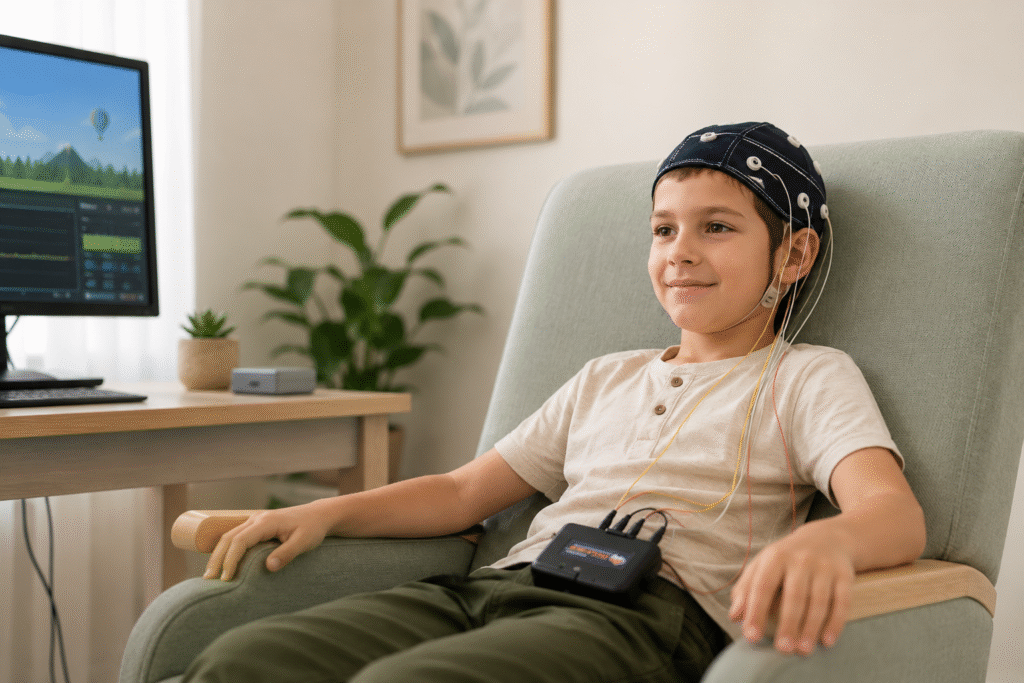
During a session, small sensors are placed on the scalp to measure brainwave activity. The sensors don’t send anything into the brain—they simply “listen” to what the brain is doing. That information is then connected to a game, movie, or other interactive activity that provides real-time feedback. This process reinforces healthy brain patterns to specifically improve the unhealthy brain patterns discovered using the QEEG brain mapping.
Many parents are surprised to learn how simple the process is. Children often spend sessions watching a favorite show or engaging with a computer-based activity while their brain receives feedback and practices more efficient patterns of functioning. Over time, this process helps the brain become healthier.
One way to think about neurofeedback is like a mirror for the brain. Just as a mirror helps us adjust our posture, neurofeedback helps the brain recognize its own activity and make adjustments over time.
Many people enjoy the process because sessions often feel more like participating in a game than computerized therapy.
Neurofeedback has been studied for several decades and is one of the most researched forms of biofeedback for attention-related difficulties. Multiple clinical trials and meta- analyses have found improvements in attention, impulsivity, and executive functioning among children with ADHD following neurofeedback training.
The Importance of Brain Mapping
One of the reasons OCHP’s approach is unique is the use of quantitative electroencephalography (QEEG), commonly called brain mapping.
Every person with ADHD is different. The brain patterns of each individual on the spectrum are also different. Thus, two individuals may share the same diagnosis and symptoms, while having very different underlying patterns of brain activity. While individuals with ADHD often have one brain map pattern, most people with autism have 2-3 different, often opposite, underlying brain patterns.
QEEG brain mapping provides a detailed picture of how an individual’s brain is functioning and helps identify areas that may benefit from training. Rather than using a one-size-fits-all approach, brain mapping allows our clinicians to create a treatment plan tailored to each individual’s unique neurological profile.
Why Neurofeedback for ADHD?
Children with ADHD are often told they need to pay attention, stay organized, sit still, and control impulses. Yet these are precisely the skills that can be difficult when the brain’s networks are not working well or can’t regulate themselves.
Neurofeedback targets the underlying brain processes involved in attention and self- control rather than focusing solely on outward behavior. Studies have shown that neurofeedback can help improve:
- Sustained attention
- Focus and concentration
- Impulse control
- Emotional regulation
- Executive functioning
- Sleep quality
Parents often report that everyday tasks become more manageable over time, whether that’s completing homework, following directions, transitioning between activities, or handling frustration more effectively.
Supporting Children on the Autism Spectrum
Autism is not something that needs to be “fixed.” However, children on the spectrum experience many challenges at school and at home that can significantly impact their daily life. Neurofeedback ‘s goal is to help the brain function more efficiently in areas individually determined by their brain map where the child may be experiencing distress or difficulty.
Families often seek neurofeedback support when their child struggles with:
- Emotional regulation
- Anxiety and stress
- Sensory overload
- Sleep disturbances
- Attention difficulties
- Transitions and flexibility
- Social fatigue
- Expressive communication
- Social skills weaknesses
By helping the brain improve these patterns, neurofeedback may reduce the intensity of these challenges and help students feel more comfortable navigating their environments.
Common Questions Parents Ask
Is Neurofeedback Safe?
Yes. Neurofeedback is non-invasive and painless. Students often play games or participate in interactive activities during training sessions. Sensors simply record brainwave activity; nothing is transmitted into the brain.
Is There Solid Research on Neurofeedback?
Yes, there is more than 40 years of research that shows neurofeedback works. In 2019, there was an in-depth study of 314 research studies that met strict criteria for inclusion. Of these, 298 showed positive outcomes for a variety of conditions.
Will My Student Need to Stop Medication?
Not necessarily. Neurofeedback can be used alongside medication, psychotherapy, school accommodations, and other interventions. Treatment decisions should always be made in collaboration with your child’s healthcare providers.
How Long Does It Take to See Results?
Every person is different. Some families notice initial changes within the first several sessions, while others observe more gradual improvements over time; in general neurofeedback takes repetition for the brain to be trained and for changes to be maintained. Neurofeedback is best viewed as a learning and conditioning process for the brain, much like building strength through exercise. However, after a certain number of sessions, the improvements are maintained even after the sessions stop. Consistency is important for achieving meaningful results.
A Whole-Child Approach
At OCHP, we recognize that no single intervention addresses every challenge a child may face. Neurofeedback is most effective when considered as part of a comprehensive approach that may include therapy, educational support, family involvement, healthy sleep habits, and other evidence-based interventions.
For many families, neurofeedback offers something uniquely empowering: an opportunity to help their students develop stronger self-regulation in their brain from the inside out, without side effects than can last!
If your child struggles with attention, emotional regulation, anxiety, social difficulties, communication challenges, sensory challenges, or sleep difficulties, neurofeedback may be worth exploring. Through individualized brain mapping and personalized neurofeedback training, OCHP helps families better understand how their child’s brain works and identify pathways toward greater success at home, at school, and in everyday life. Through neurofeedback, or our other therapy services, we can help your child experience a brighter and more fulfilling future.
Learn more about OCHP’s Neurofeedback Services
If you are considering neurofeedback for yourself or a loved one, ask us about OCHP’s neurofeedback services directed by Dr. Michael K. Linden, a nationally recognized and certified biofeedback and neurofeedback therapist with more than 30 years of experience in the field. Orange County Health Psychologists has a variety of experienced providers that can support you or your child’s needs. Contact us today for more information.
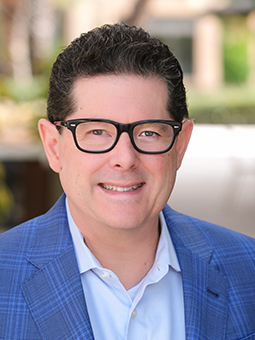
Michael K. Linden, PsyD
Schedule an appointment
949-528-6300
Linden@OCHealthPsych.com
CA License #PSY11788